

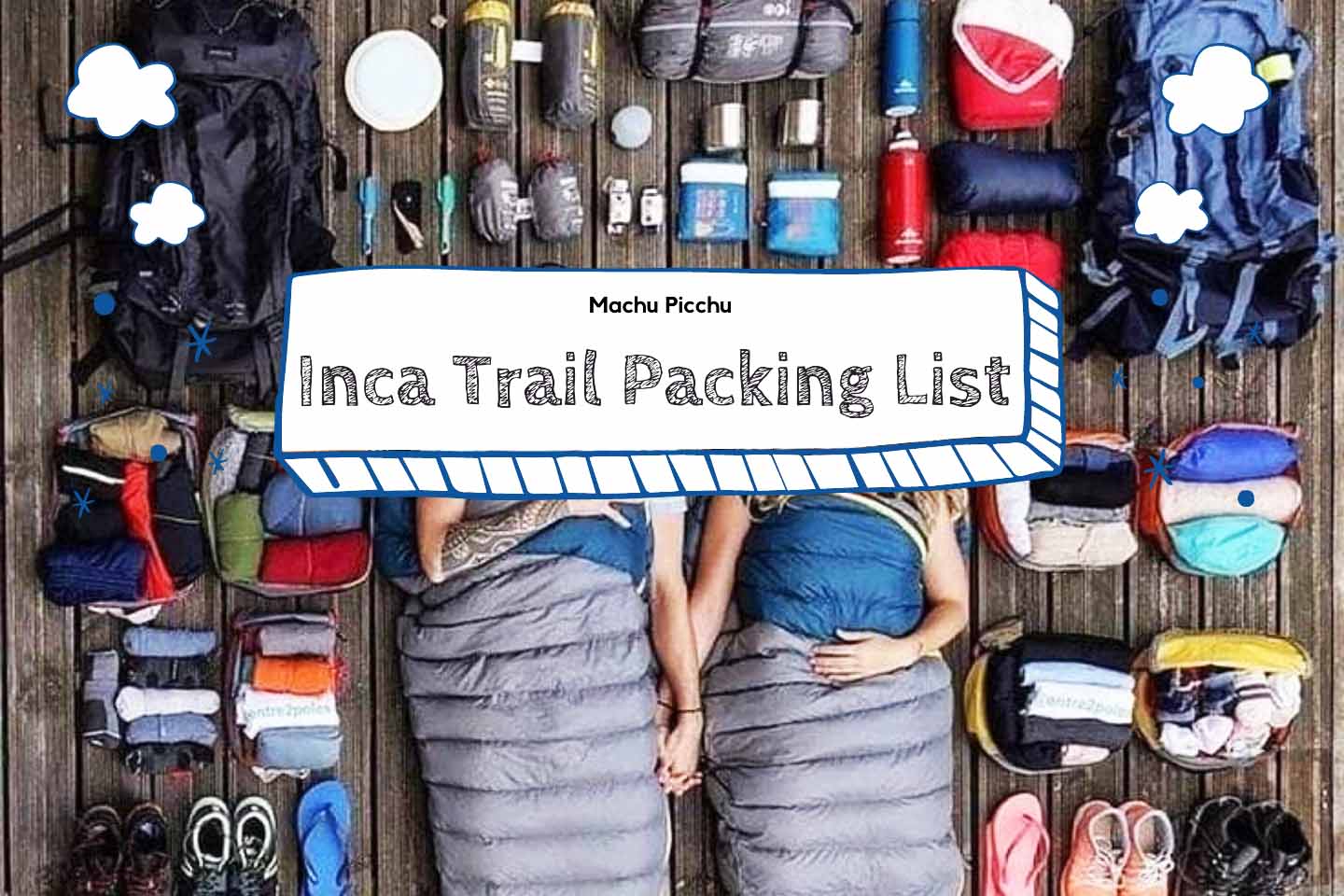
The short answer: pack a well-fitted day pack, waterproof layers, broken-in boots, a headlamp, and a duffel bag under 7kg (15lbs) for the porters. This packing list for the Inca Trail to Machu Picchu goes further than that, covering exactly what to layer and why, how the porter weight system actually works, and the specific gear mistakes that turn a great trek into an uncomfortable one. For the full trek overview beyond packing, see our Inca Trail hiking guide.
Packing smart depends entirely on the month you travel, since this significantly affects your trip. Whether you're trekking during the rainy season (November to March) or the dry season (April to October), the Peruvian Andes are unpredictable: expect sunshine, strong winds, and sudden rain within the same afternoon. This guide covers the classic Inca Trail 4-day route, so you can focus on your daily hike instead of second-guessing your bag.
What to know before you go
There are two versions of the Inca Trail you can hike to Machu Picchu: the 4-day "Classic Inca Trail to Machu Picchu" and the 2-day "Short Inca Trail to Machu Picchu." The 2-day route has less elevation gain than the 4-day version and gives you more time for sightseeing, since you take the train to Km 104, the starting point for this shorter hike, making it noticeably less strenuous overall.
How to layer for the Inca Trail
Temperatures on the trail swing from near-freezing before dawn to warm and sunny by midday, so layering matters more than any single item on your list. The system that actually works: a moisture-wicking base layer, an insulating mid layer, and a waterproof outer shell you can add or strip as the day changes.
Merino wool is worth the extra cost for base layers because it wicks sweat away from your skin and keeps insulating even when damp, which matters at altitude when you're working hard on the climbs. Cotton is the one fabric to leave at home: it absorbs moisture, dries slowly, and once wet at 4,000 meters it will not keep you warm, it will do the opposite.
Your own day pack checklist
- Day pack for hiking: your day pack will be your best friend for the next four days, so make sure it fits well and offers plenty of support. A 20 to 30L capacity is ideal for the trail itself, any bigger and you'll be tempted to overpack. Look for one with waist straps to protect your shoulders; we recommend an Osprey pack. Note this is separate from Machu Picchu's own entry rule: the citadel itself caps daypacks at 25L, so if your trail pack runs larger, plan to leave it at your hotel or with your guide on the Machu Picchu visit day.
- A water bladder: staying hydrated is key, especially at high altitudes. A water bladder makes it easy to sip as you go, no need to fumble with bottles mid-stride. A 2 to 3-liter bladder is right for this trek.
- A headlamp: you'll use a headlamp more than you'd expect, getting up before dawn, winding down after dark, and especially during your early hike to Machu Picchu on the last day. A rechargeable model is worth it, and don't forget a power bank so you don't run out of light.
4 day Inca Trek Packing List Download PDF - HERE
Getting your boots right
Your hiking boots are your best friend out there, and fit matters more than brand. Make sure they're sturdy, well broken-in, and dry quickly when wet, since a blister on day one ruins the rest of the trip. A simple fit test: push your foot all the way forward inside the boot, then try to slide one finger down between your heel and the back of the boot. If it fits snugly, the boot is sized right; if there's no room at all, or too much, size up or down before you leave home, not on the trail.
Waterproofs matter as much as the boots themselves. High-quality, lightweight GORE-TEX is the way to go. At minimum, pack a rain jacket and a backpack cover, and if rain is in the forecast, add waterproof trousers too. For evenings, camp shoes make a real difference: nothing beats slipping into something comfortable after a long day, and any lightweight, comfy pair will do.
To prevent blisters before they start rather than treating them after: apply moleskin or a blister pad to known hot spots (heels, small toes) before you start hiking each morning, not after you feel a hot spot forming. By the time it hurts, the skin is already damaged.
Carried by the porters directly to the campsite
How much clothing you pack depends on how fresh you want to feel during the trek. If you prefer a fresh change daily, bring enough outfits for the whole trip, just be ready to carry the extra weight in your duffel. If you're fine re-wearing gear (two outfits rotated every two days works well for most hikers), you can pack lighter. Here's what we'd recommend for a comfortable trip:
- Walking boots: your inca trail hiking boots are non-negotiable, see the fit guidance above.
- Waterproofs: rain jacket, waterproof trousers if rain is forecast, and a backpack cover.
- Camp shoes: for evenings at camp.
- A sleeping outfit: keep a dry set exclusively for evenings, thermal leggings, a thin fleece, and cozy socks make a real difference after a day of trekking.
- 4 sweat-wicking tops: lightweight, breathable, and quick-drying.
- 4 bottoms: a couple of pairs of shorts, plus leggings you can layer over shorts and adjust as the day warms up.
- 5 units of underwear: always pack extra.
- 4 pairs of socks: hiking socks for the trail, plus one cozy pair reserved for evenings.
With these essentials packed, you're set for the adventure, the right gear makes all the difference, so pack smart and get ready to explore Machu Picchu.
Sleeping gear and weight budget
1. Sleeping pad: we heavily recommend bringing your own lightweight self-inflating sleeping pad. Tour Leaders Peru's group tours include an Air Rail Plus sleeping pad for added comfort, and if you're joining an Inca Trail group service, you also have the option to rent a sleeping pad directly from our office.
2. Sleeping bag: sleeping bags are not included in the Inca Trail Tours and need to be rented, Tour Leaders Peru includes one only in the Private service. You can also bring your own sleeping bag depending on how long you intend to keep hiking in Peru, since the longer you'll use it, the more it's worth carrying versus renting locally. For rating, a four-season bag rated to about -10C is the standard year-round recommendation, a -4C bag is acceptable only if you're trekking in the drier shoulder months of May, September, or October. We include all the camping gear you need for each private tour to Machu Picchu.
3. A sleeping bag liner: a silk liner is a genuine upgrade, lightweight, packs small, and adds a layer of warmth (and cleanliness if you're renting a bag). Tour Leaders Peru includes a liner for each sleeping bag.
Putting it all in perspective: most experienced trekkers aim for roughly 15kg of total gear, split between what you wear or carry yourself day to day (3 to 5kg) and what goes in your porter-carried duffel (the remaining 10 to 12kg, still within the 7kg duffel weight limit once you subtract shared camping gear). Renting your sleeping bag and pad through your operator, rather than flying them in, is the easiest way to stay under that limit.
Medication and skin protection
First aid kit: make sure you include important medicines like aspirin, ibuprofen, or paracetamol, plus any other doctor-prescribed medication on your checklist. We provide a first-aid kit for every trekker, including bandages, painkillers, and disinfectant cream, but bring your own prescriptions.
Sunscreen: go for SPF50 for both face and body, the sun at altitude is stronger than it feels, and it does not let up just because it's cool out.
Mosquito repellent: look for one with a DEET concentration above 90% for effective, longer-lasting protection at altitude, since sweat and humidity break down weaker formulas fast.
Blister prevention: apply moleskin or a blister pad to known problem spots before you start hiking each day, not after a hot spot has already formed, see the boot section above for the full approach.
Documentation, toiletries, and electronics
Passport: required on the hike, so make sure you bring it, it's checked at the trail entrance.
Cash: bring 500 to 600 Peruvian soles ($200) for the trek, mostly for tipping guides, porters, and chefs. A few coins are also useful for toilets on day one. See our complete guide to tipping on the Inca Trail.
Toiletries: toilet paper, wet wipes, hand sanitizer, toothpaste, and a lightweight microfiber towel (cold shower options exist along the way, and it's surprisingly refreshing before reaching Machu Picchu). Don't worry if you forget something, Cusco has plenty of stores selling hiking supplies before you start.
Electronics: bring your phone and camera, plus a couple of portable chargers, there's no electricity on the trail. Put your phone on airplane mode to save battery.

Elevation, best time, and permits
The Inca Trail is not an especially difficult hike physically, but there are steep climbs and descents to prepare for. On the 2-day version, you'll still climb above 2,600 meters (8,530 feet). It's worth checking with your doctor before signing up if you have any concerns about altitude sickness or heart health, and being in good physical condition matters more than any single piece of gear on this list. On the Classic 4-day route, the highest point is 4,200 meters (13,779 feet) at Warmiwañusca, Dead Woman's Pass.
The best time to hike the Machu Picchu Trek is from April or May through September or October. The Inca Trail closes every February for trail maintenance and because it falls during the peak of the rainy season. April, May, September, and October are the sweet spot: fewer crowds and better odds of good weather.
Cusco sits at 3,400 meters (11,152 feet), so if you're flying in, plan to spend a few days acclimatizing before starting the Inca Trail. We recommend easy day tours around Cusco, like the Sacred Valley or a Cusco City walking tour, during that window. The CDC's Yellow Book guidance on high-elevation travel backs this up directly: 2 to 3 days at intermediate elevation measurably lowers your risk of altitude illness before you ascend further.
Permits sell out months in advance, so book yours as early as possible if the Inca Trail is on your list. You can check Inca Trail tour availability directly with us, though for permit purchases outside a tour you'll need to go through the official Inca Trail office in Cusco.
Source: CDC Yellow Book, High-Elevation Travel and Altitude Illness guidance.
Frequently Asked Questions
What to pack for Inca Trail trekking?
A well-fitted day pack (20 to 30L), waterproof layers, broken-in hiking boots, a headlamp, a 2 to 3L water bladder, sun protection, and a duffel bag under 7kg (15lbs) for the porters. See the full breakdown above, organized by what you carry yourself versus what porters carry for you.
What is the weight limit for the duffel bag on the Inca Trail?
7 kilograms (15lbs) per person for the bag porters carry to camp. Sleeping bags and pads provided or rented through your operator do not count against this limit.
Do I need hiking poles for the Inca Trail?
They're not required but strongly recommended, especially for the steep descents on days 2 and 3, which are harder on the knees than the climbs.
What should I NOT pack for the Inca Trail?
Skip anything you don't need daily access to, since porters carry only your 7kg duffel. Selfie sticks, drones, and oversized backpacks are also restricted at Machu Picchu itself on the final day, see the prohibited-items list above.
Is the Inca Trail worth it?
Yes, and packing right is a big part of why. The gear difference is what separates an uncomfortable slog from one of the best treks in South America. Cold nights, strong sun, and steep stone stairs all reward preparation, and most of what goes wrong on the trail traces back to a packing mistake, not the trail itself.
Final thoughts
This packing list for Inca Trail trekking is meant to help you prepare for your Peru trip, based on what actually matters after guiding this trek. We hope it answers your packing questions without the stress. If anything here needs clarifying, don't hesitate to reach out before you go.
Most importantly, pack a positive mindset. The Inca Trail is breathtaking, but it's also a real physical challenge. Prepare for it, respect it, and you might just have one of the most incredible adventures of your life.
Related Guides: Inca Trail Tours 2027 · Salkantay Trek Packing List · Inca Trail Packing List for Women · Lares Trek Packing List


